
They Buried the Report
And they want to call it fairness.

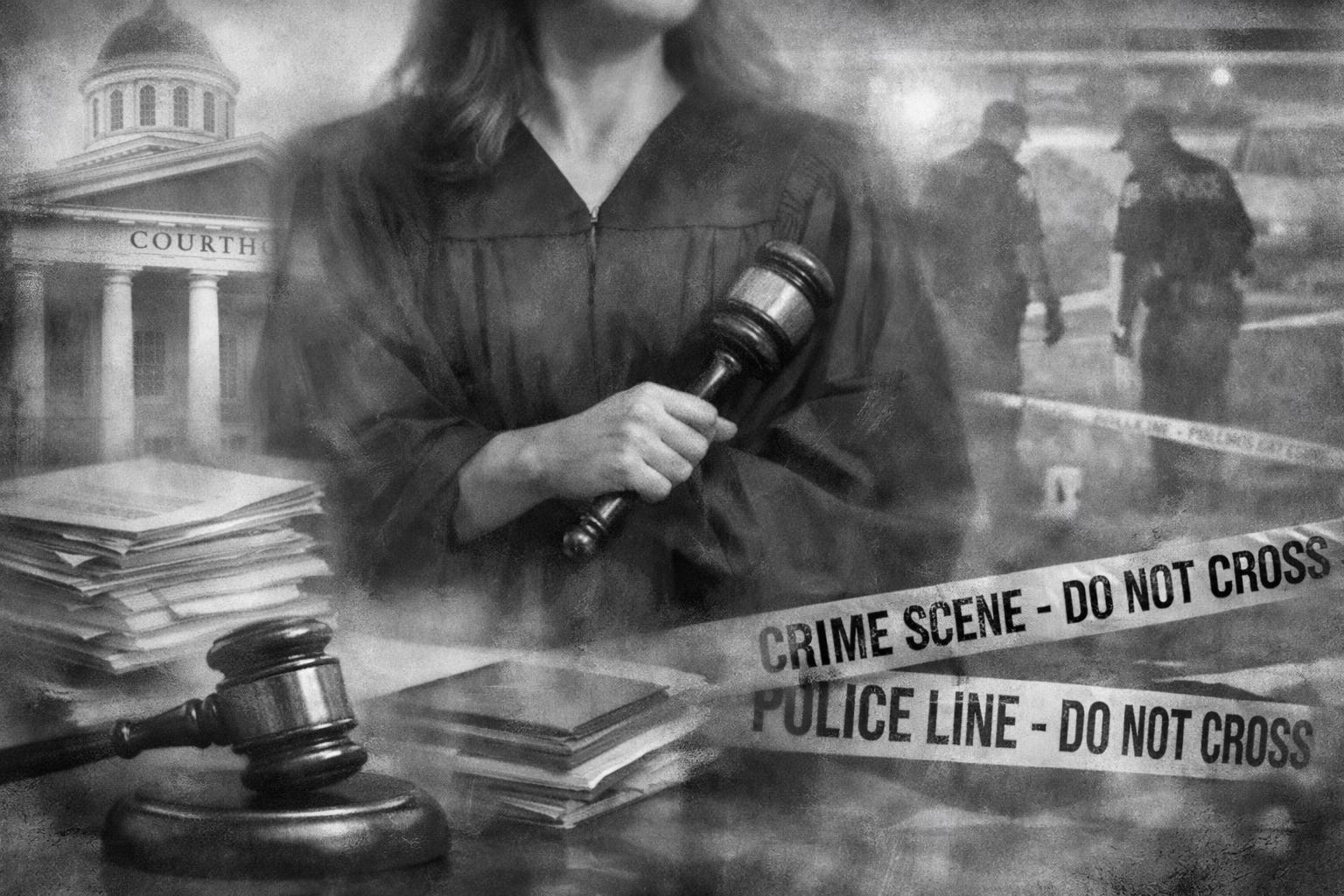
I’ve been thinking about a sentence today.
It’s not a very long one, but it carries the weight and gravity of something serious. It was written by lawyers at the United States Department of Justice. The same department that spent years and considerable public resources investigating whether (previously former) President Trump illegally kept boxes of classified documents at his Florida golf club.
You probably recall, if you followed the timeline closely, that in the course of this investigation, they also probed whether he obstructed the government’s attempts to get them back and conspired with two employees to do so.
At the time, it felt like something would be done. At least to me it did. But if you’ve followed me for some time, you know I’m a hopeless optimist, and this isn’t a disposition that always works in my favor.
That department, after having done all of the work, building the case, and having brought the right charges, turned around last month (Jan, 23rd) and told a federal judge the following:
“The illicit product of an unlawful investigation and prosecution belongs in the dustbin of history.”
Yes, it’s just a sentence. But it is unsettling for obvious reasons. In my mind, it’s nothing short of audacious, and maybe that’s exactly what they intended it to be.
“The dustbin of history,” they said.
It’s not legal language, exactly. It’s not the sort of filing that I’ve ever encountered on the docket. It’s more of a declaration. It’s the kind of language people use when they want to make something disappear. Not just practically, but morally, as well, and to retroactively strip it of all meaning.
You don’t put evidence in the dustbin of history.
You put embarrassments there.
It’s where you put things that you want people to stop talking about.
Well, I’m not ready to stop talking about it.
The Justice Department just described its own investigation as something to be ashamed of, and yesterday, Judge Aileen Cannon gave them good reason to be.
Let’s talk about why.
Here’s what actually happened, in the order that it happened, and I want you to hold the sequence in your mind because the sequence is important.
Jack Smith was appointed special counsel to investigate Donald Trump’s handling of classified documents after Trump left the White House in 2021.
Smith investigated.
He found some things. Concerning things. He brought charges against Trump and two of his employees, Waltine Nauta and Carlos De Oliveira, who Smith alleged helped hide the documents and obstruct the government’s attempts to retrieve them.
Those cases were assigned to Aileen Cannon, a federal judge Trump had appointed during his first term.
Cannon dismissed the case in July 2024.
Not on the merits. She never made it that far. She dismissed it on the grounds that Smith had been improperly appointed as special counsel.
Smith, as prosecutors do, completed a report of his findings anyway. The tradition is clear and consistent. Special counsels write up what they’ve found, and they show their work. That’s what they are supposed to do.
The public, which paid for the investigation and has a constitutional stake in what its government does, gets to read it. Or, that’s what is supposed to happen.
Cannon temporarily blocked the report just before Trump took office.
Yesterday, she made that block permanent.
Trump is now president. His administration controls the Justice Department. His Justice Department told Cannon to keep it sealed.
Cannon agreed.
Nauta and De Oliveira’s lawyers went further. They asked Cannon to destroy all remaining copies of the report entirely.
She didn’t go that far. But she went far enough.
I want to be careful here, because there’s a version of this story where everything is technically defensible.
Cannon had legal grounds for her dismissal, however contested they may be. The question of Smith’s appointment was real, if not ultimately persuasive to most legal scholars. The Justice Department has the authority to take positions on what gets released. Courts have the authority to seal documents, and sometimes they do.
All of that is true, but there is something missing from the technical account. The two other men, Nauta and De Oliveira, were charged with crimes, but they were never tried.
The case against them was dismissed. Not because a jury heard the evidence and acquitted them, and not because a judge found the evidence insufficient, but on a procedural question that had nothing to do with whether they actually did what Smith alleged.
Now we find ourselves in a curious position.
The report describing what Smith alleges — the evidence, the findings, the detailed account of what the investigation uncovered — will never be made public. This means they won’t be exonerated by it, but neither will they be condemned for it. They’ll exist in this particular legal limbo forever, as parties charged, dismissed, and now shielded by the permanent suppression of the record, one that would have revealed to us whether the charges had merit.
Cannon presented this to us as something resembling “fairness,” but I think we know what it really is. She said releasing the report would “contravene basic notions of fairness and justice.”
I genuinely do not know what fairness she is describing here. The fairness that I understand, the kind where the public gets to see what investigators found and form its own conclusions, is not in any way served by this ruling. It is the opposite of being served by it.
What she calls “fairness,” in this context, is the phenomenon of powerful people evading accountability.
It’s a theme that we are all too familiar with lately.
There’s another word for what happens when the machinery of justice is used, not to pursue accountability, but to prevent it.
That word is corruption.
But not in the cartoon sense of brown envelopes and backroom deals, but in the older, and more precise sense. It describes a system that has been bent away from its stated purpose and manipulated. Sometimes delicately, and sometimes not, but ultimately in the service of interests peculiar to the people controlling it.
I’m not saying everyone in this story is corrupt, though they could be.
I’m saying the outcome of this sequence of events is a corrupt one.
A president is investigated. The investigation is dismissed on a technicality by a judge he appointed and has praised. The investigation record is sealed by that same judge. His Justice Department endorses the sealing.
The public sees nothing.
The system did not malfunction to produce this result. It functioned exactly as the people running it intended.
Let’s return, one more time, to what this article is really about:
“The illicit product of an unlawful investigation and prosecution belongs in the dustbin of history.”
I keep coming back to it because I think it’s the most honest thing anyone has said in this entire affair.
Of course, it’s not honest in the way it should be, but in the sense that it is revealing something true.
They’re not pretending this is about legal principle or the innocence of the charged parties.
They’re not even really pretending it’s about fairness.
They’re throwing the file away, and they want you to know why. They don’t care about precedent, or prudence, or how we feel about any of it. They are moving on, and they want us to move on, too. The only question remaining is whether or not we should let them.
I don’t think so.
-JC
I'm not a lawyer, it's difficult to make sense of this. What Judge Cannon has done is possibly set a precedent, allowing a federal crime to be readily dismissed due to a technicality. Are we now to accept throwing all federal cases into her idea of a "dustbin" to forget about them? Americans deserve to know the truth!
I cannot believe this will be the final end. It can be appealed, can’t it?