
The Quiet Collapse

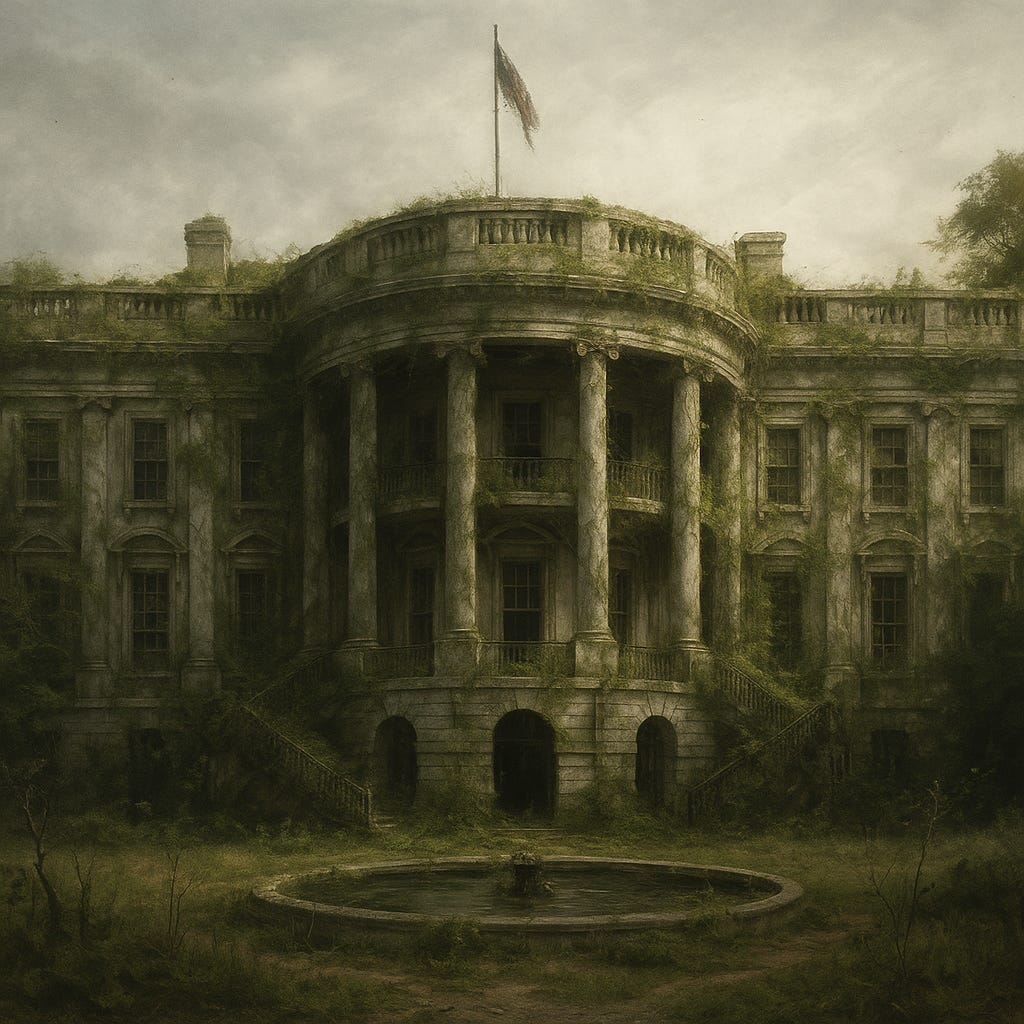
At first, no one believed it would be permanent. Government shutdowns were familiar storms in Washington. They were loud, but never lasting. Agencies would close, museums posted signs, federal workers braced for missed paychecks, and then, just before disaster, a deal would arrive and everything would blink back to life.
This one began the same way. The lights went off, politicians blamed each other on television, and people shrugged. They kept their routines. They used the word temporary the way a parent promises “soon” to a hungry child.
But time passed. A month, then two. The word temporary faded. Commentators started saying “ongoing,” and then “indefinite.” No one announced the change. It simply slid into the national vocabulary.
Early consequences arrived quietly and without drama. A veteran in Tulsa pulled on the locked door of the VA pharmacy and counted his insulin supply by the day. A neonatal unit in Georgia closed because reimbursements never came. Parents held their newborns and learned grief without preparation.
The stock market did not crash overnight. It twitched, plunged, rose, then lay still. Not because the economy was gone, but because trust had abandoned it. Credit agencies invented new phrases for uncertainty, and there were many.
People began to understand that institutions could die like living things. First invisibly, cell by cell, and then all at once.
Hunger appeared before anyone gave it a name. Grocery store clerks beeped and rejected electronic benefit cards. Food bank lines wrapped around blocks. Shelves that once held endless supplies stayed empty. Families stretched meals, because what choice did they have?
Grandparents remembered hard times, but said this one felt different. Back then, they knew it would end. This time, no one could say when help would come. No one was sure it ever would.
The President spoke confidently on television surrounded by flags. He said sacrifice would be brief. His voice echoed in living rooms, but the promises felt thin and far away.
Airports shifted from frustration to silence. Air traffic controllers stopped showing up, and their replacements never arrived. Planes sat at gates collecting dust. Departure boards became graveyards of canceled flights. People built makeshift camps in the terminals, charging their phones and sharing rumors. Some said the FAA would be back by Thursday. Others whispered that there were no Thursdays anymore, only the same day, endlessly repeating.
Mail stopped being delivered on time. Pension checks, medications, legal notices, all vanished into locked buildings with no staff to sort them. The courts closed quietly. Police lines went unanswered. The number that always produced a voice, now rang endlessly into nothing.
The first summer without a budget settled over the country like a heavy blanket. Fireworks were replaced by trash fires. Families sat around cold stoves and asked each other if they remembered when light came from a switch, and clean water was a guarantee.
Disease returned like an old story people had forgotten. Measles, cholera, a harsh strain of flu, all moved through communities without warning. The Center for Disease Control was no longer a functioning place. It survived only in memory, and in files no one could access.
States tried to govern themselves at first. Wealthier ones used taxes to keep some services alive. They reopened clinics, hired firefighters, and issued their own emergency edicts. Poorer states waited for federal help that never came. Counties formed coalitions. Small towns shared fire trucks. Cities hired private companies to keep water flowing and the streets lit. These solutions worked until they didn’t. They held shape like sand against the wind.
Washington changed faster than anyone expected. Grass split the marble steps of monuments. Graffiti sprawled over the word “Union” on government buildings. The reflecting pool grew algae and stopped mirroring the sky.
Eventually, the White House no longer hosted meetings. It housed strangers who cooked in the garden. People called it the People’s House again, though it no longer belonged to a people with a government.
Children adapted more quickly than adults. They went to schools organized in living rooms and abandoned churches. Textbooks ended at the year things stopped working. Teachers tried to explain civics but stumbled at the definition of government. Science survived in garages and farm sheds. Telescopes pointed at skies untouched by satellite trails.
Winter no longer followed weather patterns or calendars. It followed power grids. Without coordination, fuel sat far from those who needed it. Families taped windows with old campaign flyers promising prosperity. The cold creaked through hallways. Pipes burst. People curled under blankets and told themselves it would be warmer tomorrow. Many did not live to see tomorrow. Entire apartments froze in silence. No one kept track of how many.
By the fourth year, power was no longer a right. It was a novelty controlled by those with fuel and the means to protect it. Farmers who controlled food became leaders. Owners of generators ruled neighborhoods. Servers in underground data centers flickered with private information. The internet appeared in brief pulses. One day of connection after weeks of silence. Stories changed with each pulse. Truth became something local. Conspiracy did not need believers. It only needed chaos.
A small radio station somewhere in Virginia stayed on the air longer than most. Its final message was spoken by a tired voice that sounded honest.
The voice did not blame a party or celebrate a victory. It said the country was not lost in one moment. It was lost in every moment people chose anger over agreement, and every time they said government was the problem until it disappeared. Then the voice said nothing more. Static filled the air. The station never came back.
Maps became outdated overnight. New names appeared. Republics, coalitions, alliances. They felt temporary, like labels on boxes no one planned to unpack.
The military did not collapse. It dissolved into individuals with training and absent orders. Soldiers guarded farms or towns in exchange for food and fuel. There were no declarations of independence because independence had become survival.
In a school without funding, a teacher read to her students from an old civics book. The sentence said government exists to serve the people. She hesitated, then closed the book. Outside the window, tents stretched across a park where children once played. A column of smoke climbed into the sky. She taught her students how to boil water and clean wounds instead.
People wanted a story with light at the end. A story where communities rediscovered hope and built something better. That story belonged to another world. This one did not end, it simply continued. The monuments did not fall. They stood expressionless under gray skies. The flag did not burn. It faded on empty flagpoles into a color beyond recognition.
The shutdown became permanent, not because the system was weak. It became permanent because people stopped believing they needed it. They mocked it. They starved it. They watched it fall and asked why it did not get back up.
What ended was belief. Not in a party, but in the idea that someone, somewhere, was still in charge. The shutdown stopped being an event. It became the weather. It became the air people breathed.
At night, in the capital, a light might blink in an empty office building. A phone might ring somewhere, unheard but still ringing. Not because anyone was calling for help. But because systems built to respond had forgotten how to stop.
The warning was never about fire or theft or violence. It was about the silence. The kind that settles over a place and convinces people that speaking is useless. After all, a nation doesn’t lose its voice in one day. It loses it in whispers, until there is nothing left to say.
An excellent reminder that "we the people" need to wake up NOW.
Could happen. But I just spoke with a mail carrier they don’t receive government funding so perhaps mail continues. Cities don’t get federal funding for police or fire so maybe those continue. States will have to raise taxes on the “wealthy” schools will continue as the feds only provide a small portion of state ed budgets but programs will be reduced. Travel will definitely be disrupted. People who can leave will emigrate to Europe or other countries. And then states will secede. Form alliances and our 50 states will not share one federal government. EU type alliances may form. But the democratic republic of the USA will be no more.